
Jenny Otis Miller
Pressure printing sectional maps using my “paper drawings”
Before working in the field of book arts, I worked with clay for many years. My finished works in papermaking and ceramics are similar because they both record the movement of materials at different stages of drying. Building with clay, the igneous matter records pressure which then tells a story to other people both visually and through tactile interaction. Shaping clay and recording touch is a time based process, with stages that move from wet slurry to bone dry and then to fired clay.
With paper making, a similar transformation happens where fibers evolve and are shaped by processing and by movement in water. Paper fibers loose water and dry into a fixed shape as time passes. Water is abundant as the fibers are being prepared. Shaping natural fibers into sheets of paper happens in many ways. For me, a slurry of fibers floating in water can be distributed over a porous surface (a screen and mould); as water releases, the fibers knit together and begin to form the sheet. Gravity pulls droplets of water, leaving a network of interlocking fibers behind. The paper continues to dry through evaporation until a final form is left behind. Dried paper can be highly dimensional or flattened into sheets depending on the how it was formed and how it was dried.
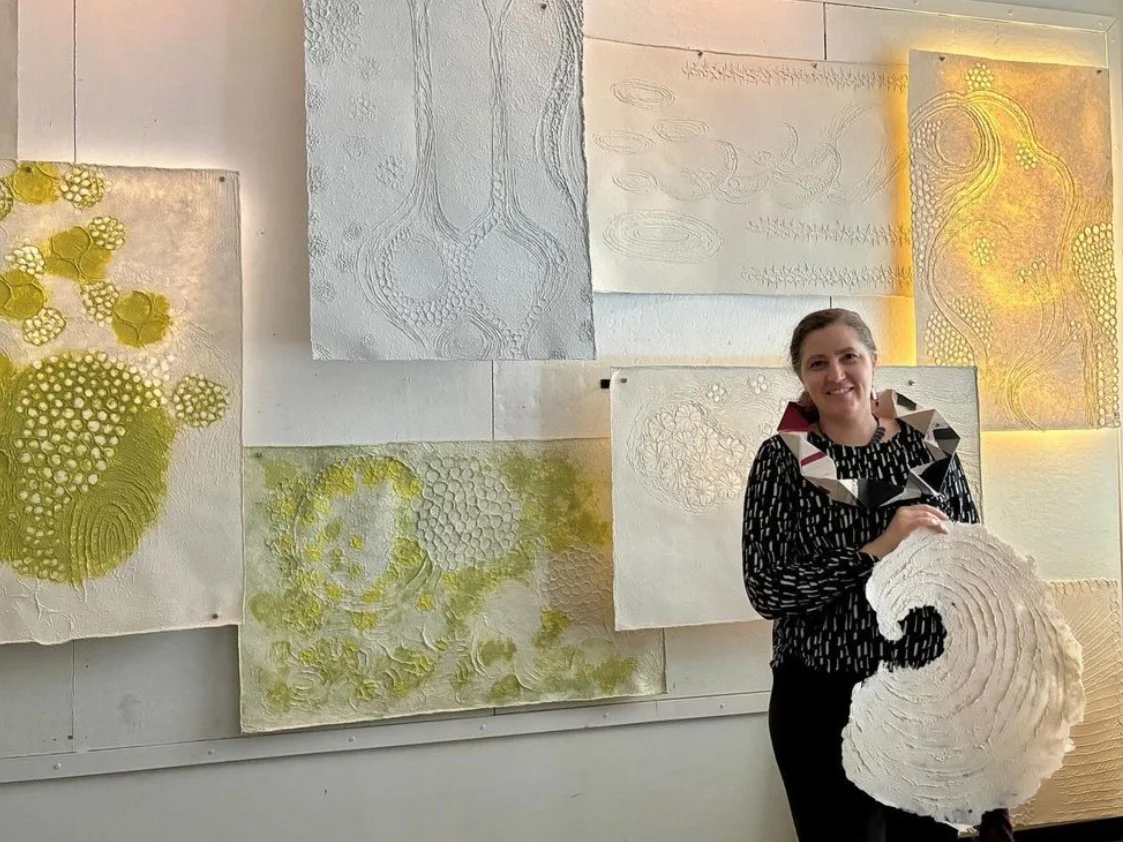
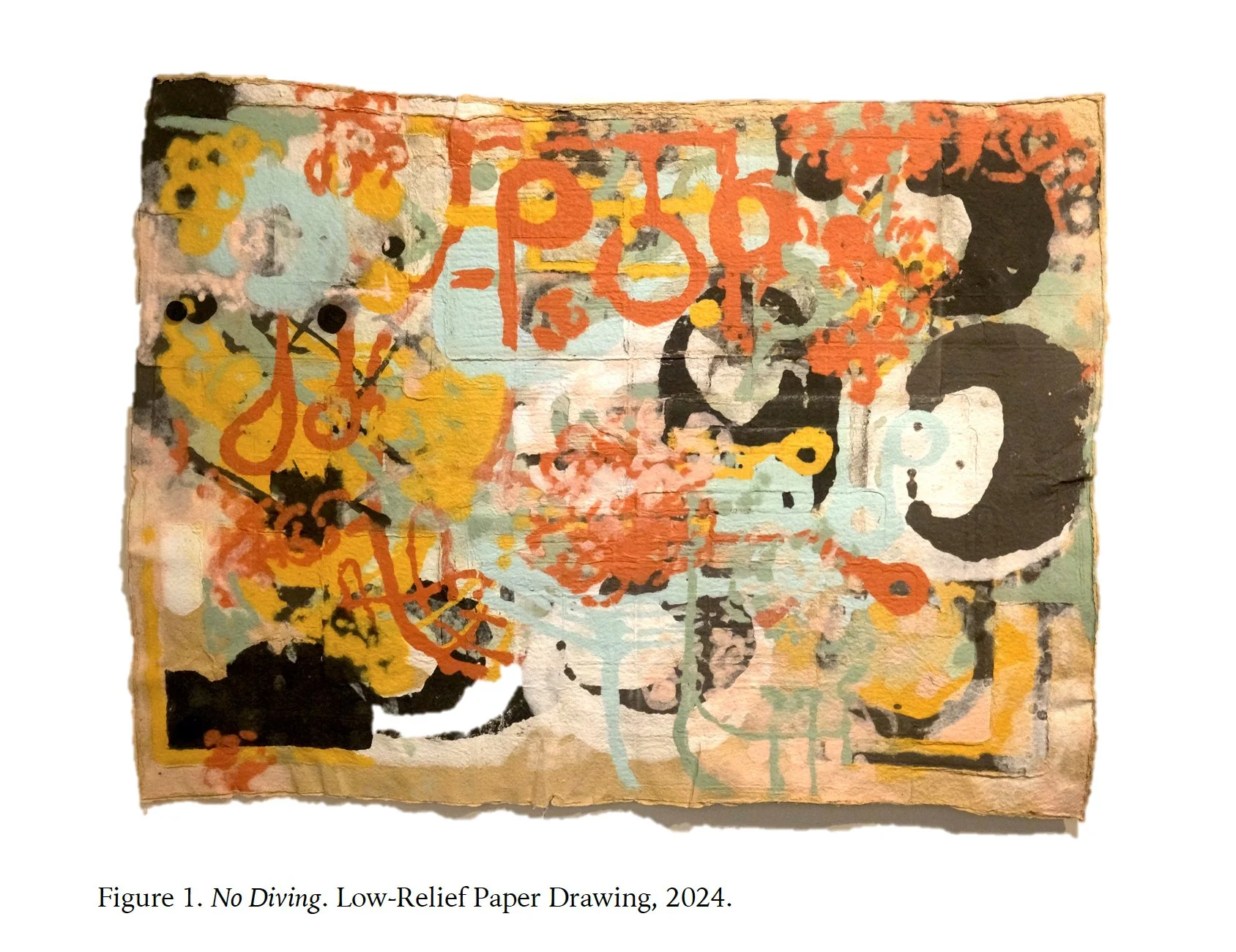
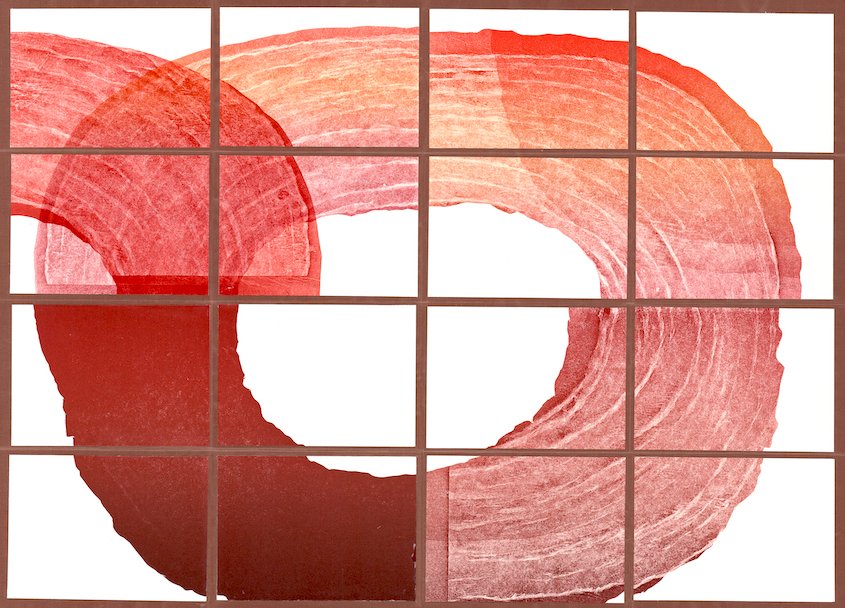
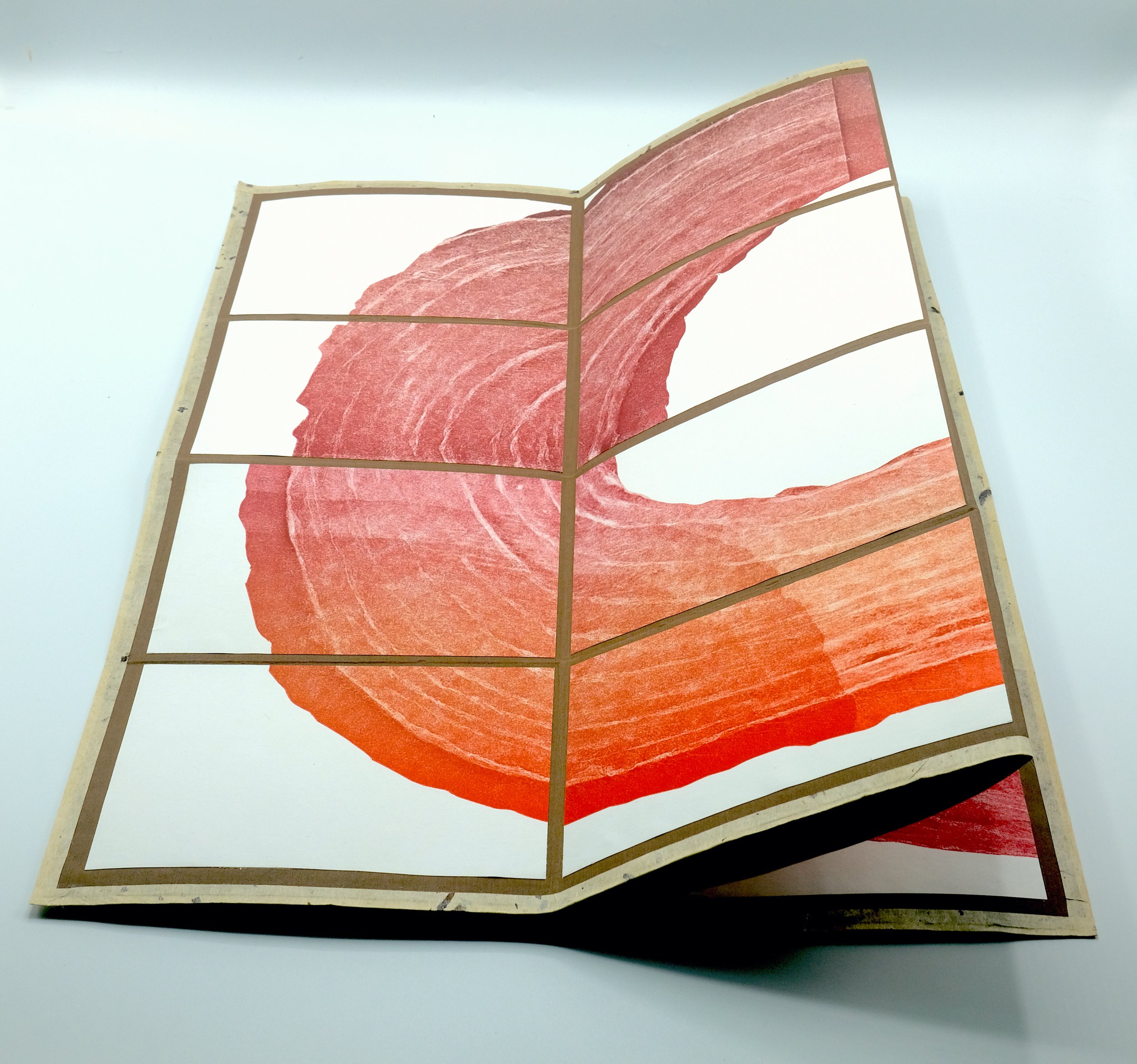
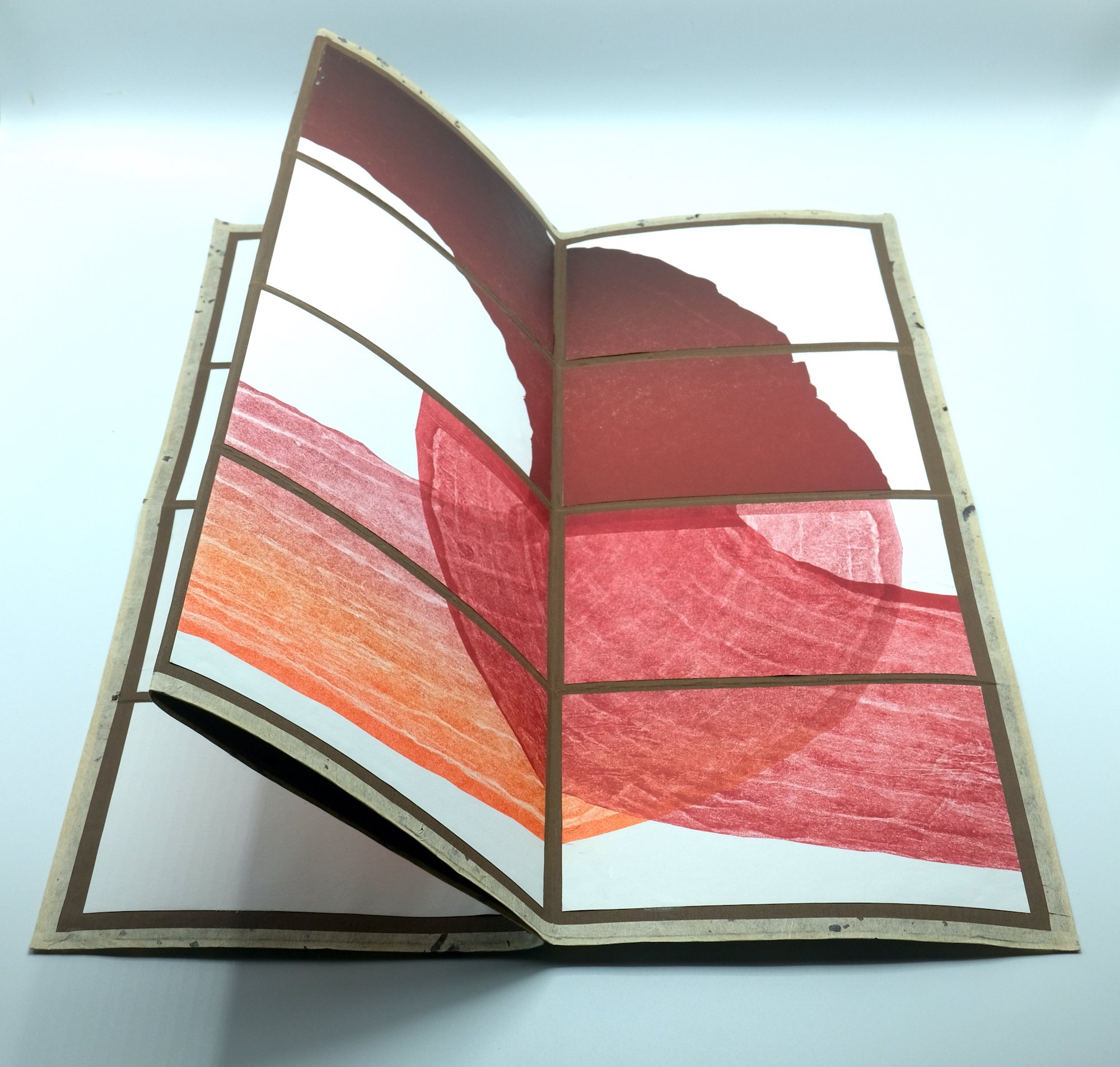
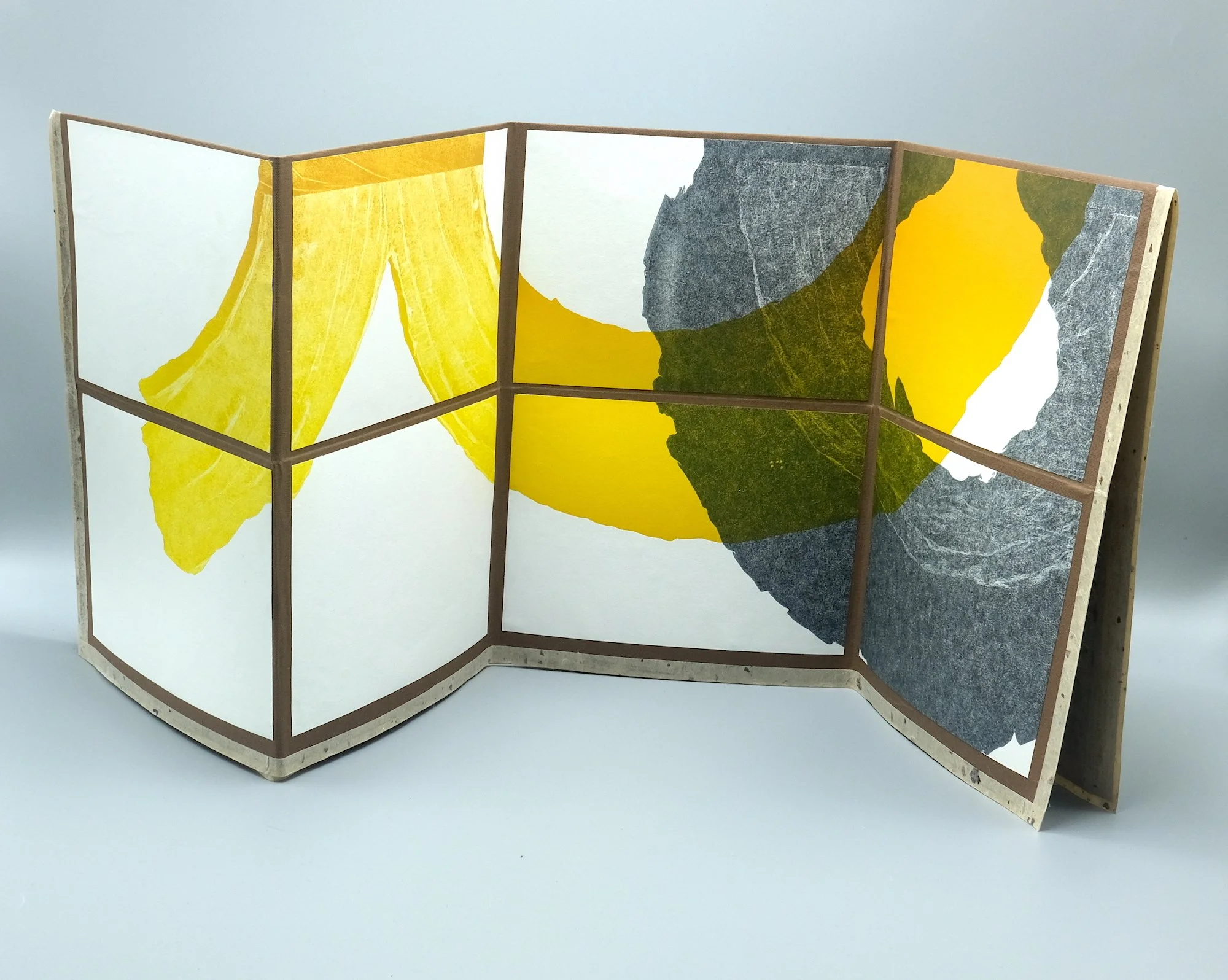
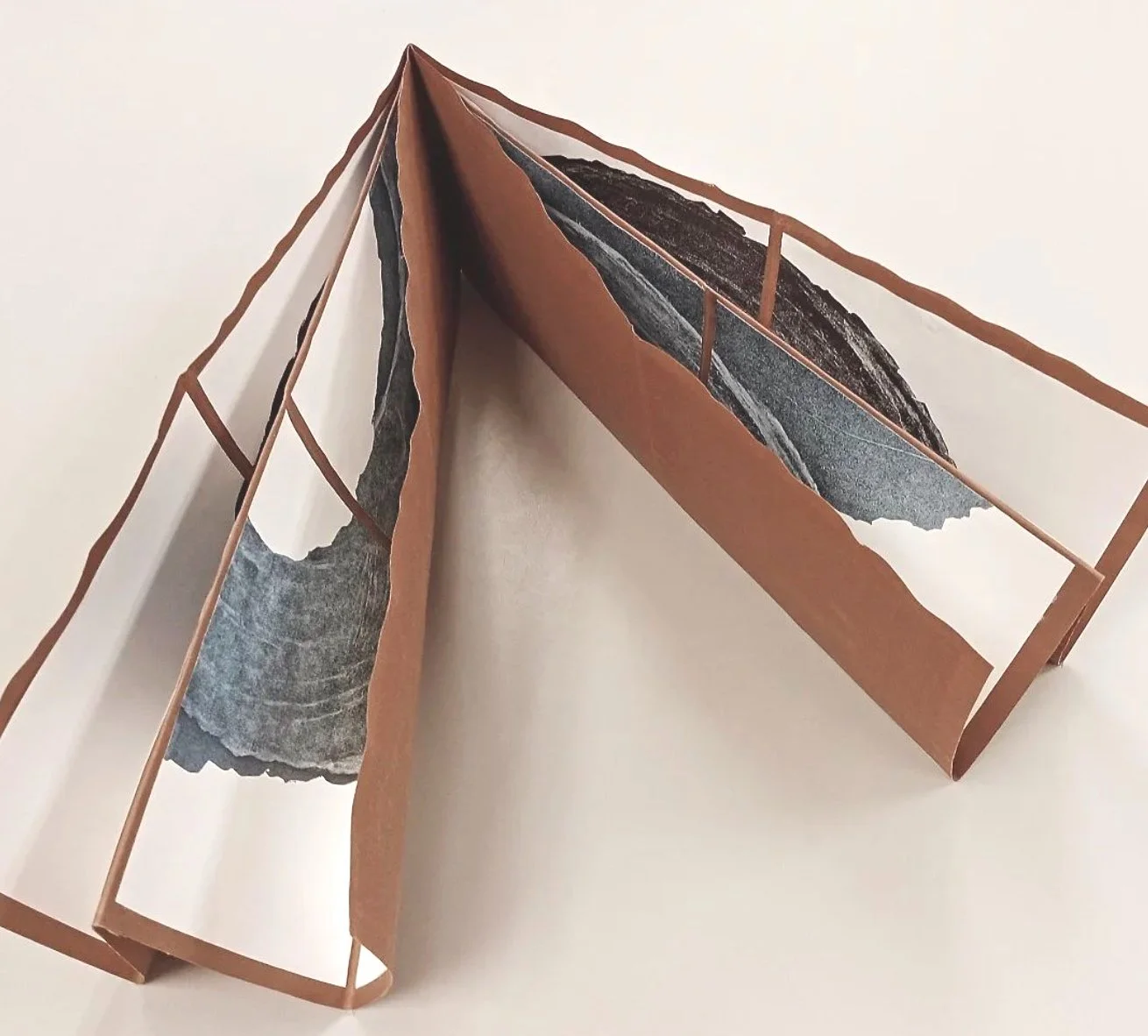
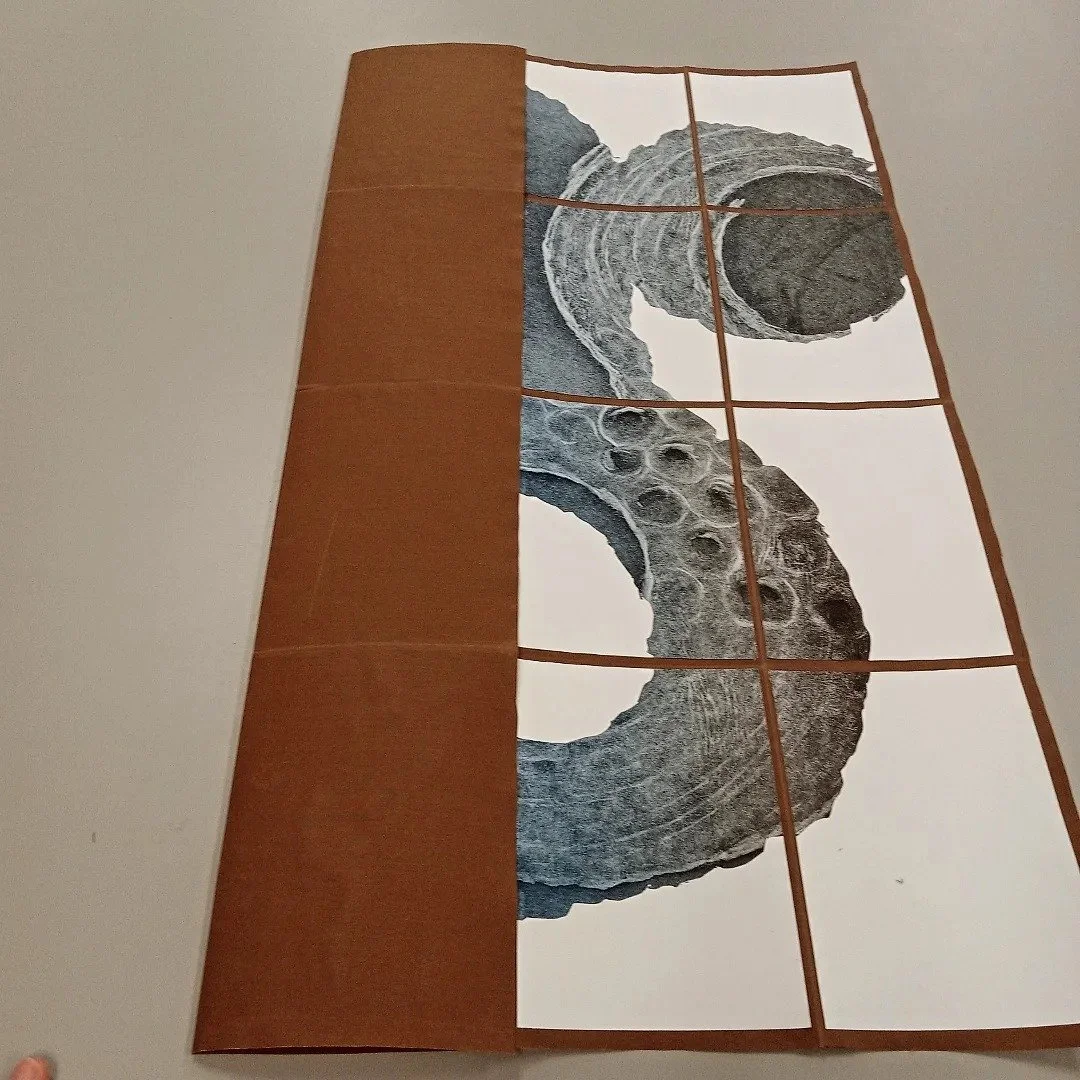
The record of human touch is possible in clay and in paper, but I also like to activate the audience’s sense of touch and movement through surface texture and by creating dynamic folded forms. When I am forming a sheet of paper, I sometimes draw into the loft of wet fiber, creating low-relief drawings. The papers are dimensional, with thin and thick areas that cast shadows in raking light and reveal transparency in the form or watermarks. The final dry form of the paper ultimately becomes a sculptural object with potential to be used in printmaking, installation art, sculpture, books, and more. Many of my thinner drawings have been used to create pressure prints, which then become folded maps. Images of my pressure printed maps are seen on this page.
How do I make pressure prints from my “paper drawings”?
First, I prepare flax fibers to make a slurry which is poured onto a porous surface. While the sheet is forming, I press into the loft of fiber, making marks that create low relief drawings. My favorite fiber to date has been raw flax, but I experiment with different fibers and often use a blend of different fibers.
“Paper drawings” are created by drawing with tools in the loft of paper after the sheet has been formed but before all the water has drained. These drawings range from very thick (board weight) to tissue thin.
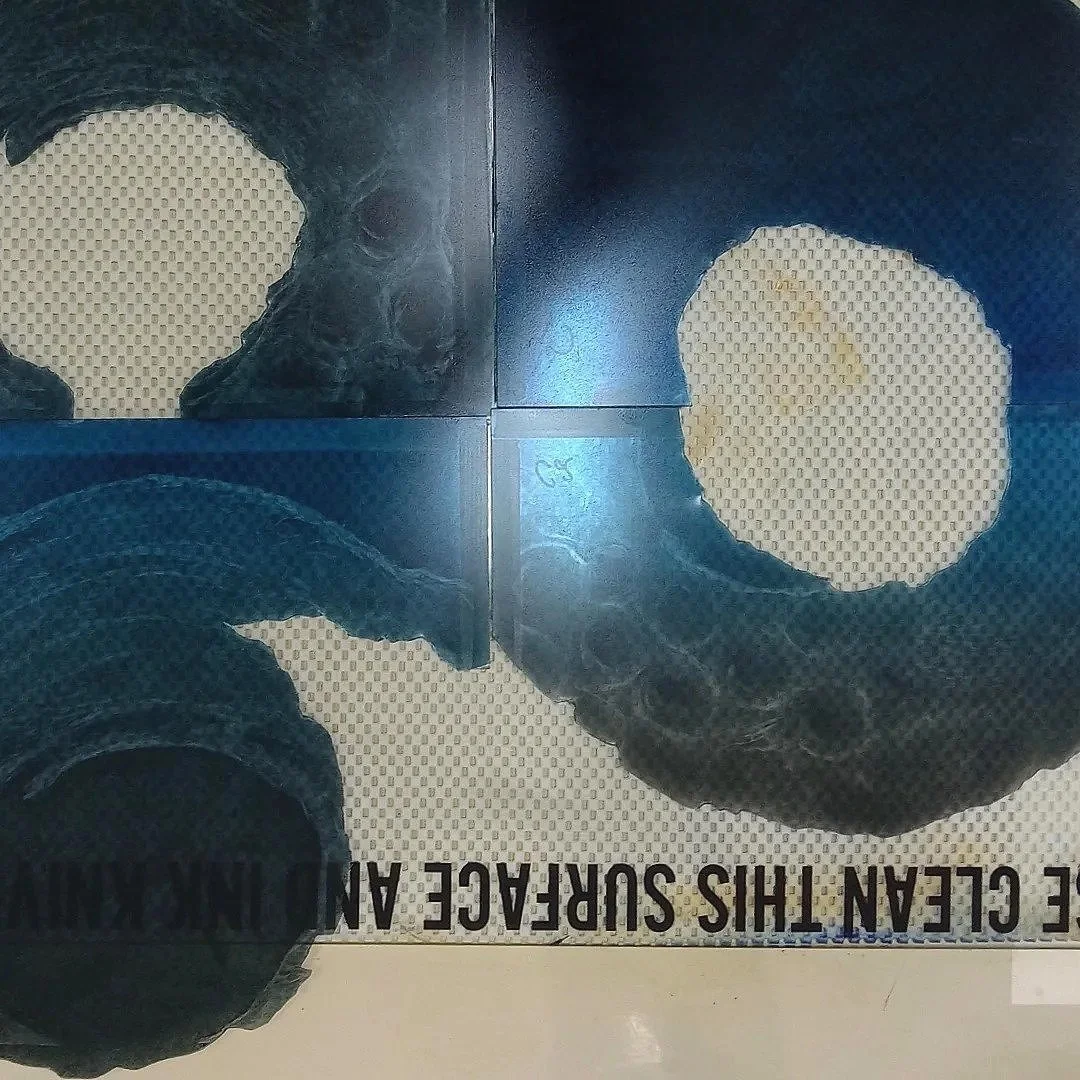
My thinnest paper drawings are useful in my letterpress projects. These thin drawings are ideal for pressure printing projects using a letterpress printing machine like a Vandercook.
I have been making limited edition maps, books, prints, and posters. After I finish printing with these low-relief paper drawings, I can then recycle the fibers into new projects.
Images of a map project titled “What We Have Left” are shown on this page. I cut the prints into sections and adhere them to book cloth to make folding maps of places. “What We Have Left” is a map of a remnant oak savanna in Iowa City, upper City Park. The maps are depicting elements of the oak savanna, in the black ink I am illustrating the tree trunks themselves, especially the older trees with knobby burls.